PILLAR 01 · THE WORKSHOP FLOOR
Why Bamboo, Never Metal: The Unspoken Engineering of the Chonga
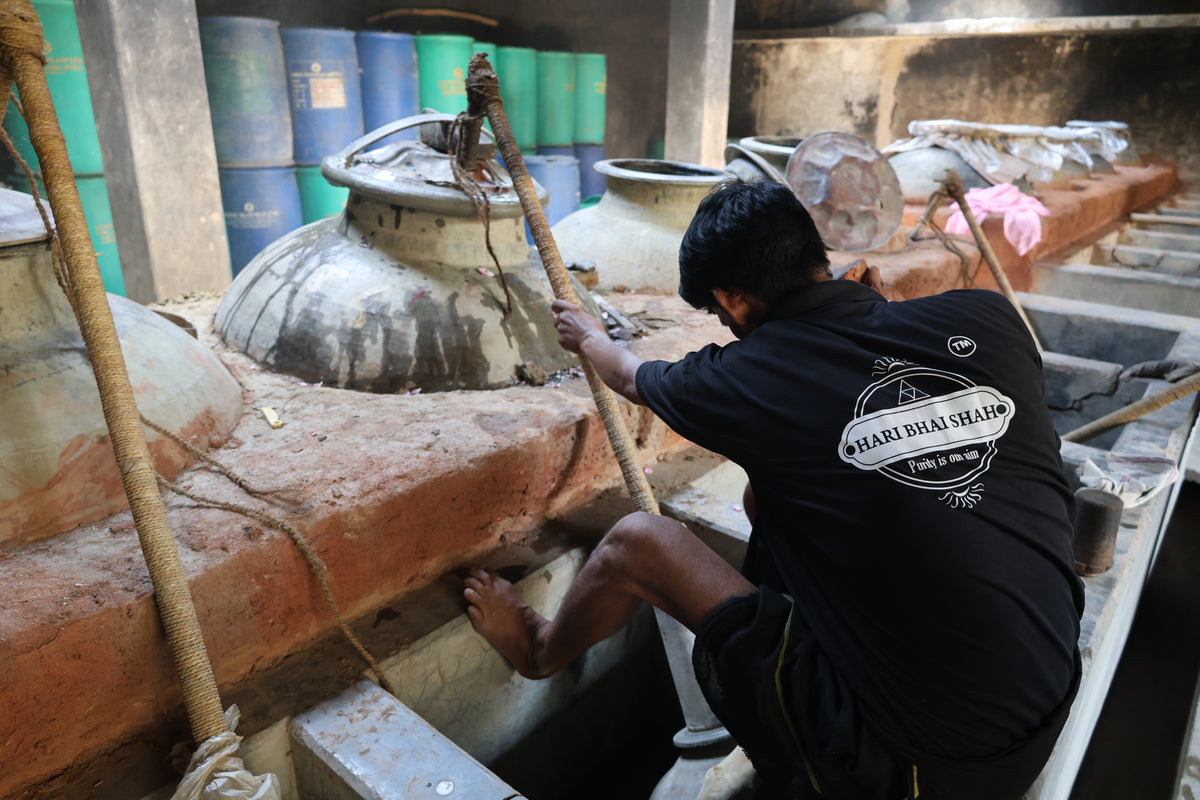
When visitors step into our Kannauj workshop, they are often drawn to the traditional copper degs and the steady wood fires burning beneath them. Yet one of the most critical elements in the entire setup is a simple, hollow length of bamboo known as the chonga.
This bamboo pipe serves as the sole bridge between the heated copper deg and the submerged copper receiver, the bhapka. For over a century—since my great-grandfather Hari Bhai lit his first distillation fire in 1920—our family has used bamboo conduits instead of modern metal tubing. The choice is not a matter of rustic aesthetic; it is a time-tested engineering decision passed down through four generations.
The Thermal Property of Bamboo
As the wood fire heats the water and fresh petals inside the copper vessel, aromatic steam rises toward the top. This steam carries the delicate essential oils of the flower through the outlet and into the chonga.
Here lies the fundamental reason for choosing bamboo over metal: unlike metal, bamboo does not conduct heat. If a metal pipe were used, the intense thermal energy from the copper deg would transfer along the conduit, keeping the pipe scorching hot and risking heat damage to the delicate floral vapor. Because bamboo acts as a natural thermal insulator, the steam cools gradually as it travels through the hollow pipe toward the submerged bhapka, beginning its natural transformation into pure attar.
Unlike metal, bamboo does not conduct heat—allowing delicate floral steam to cool naturally without thermal scorch.
Sealing the Bridge with Mitti Clay
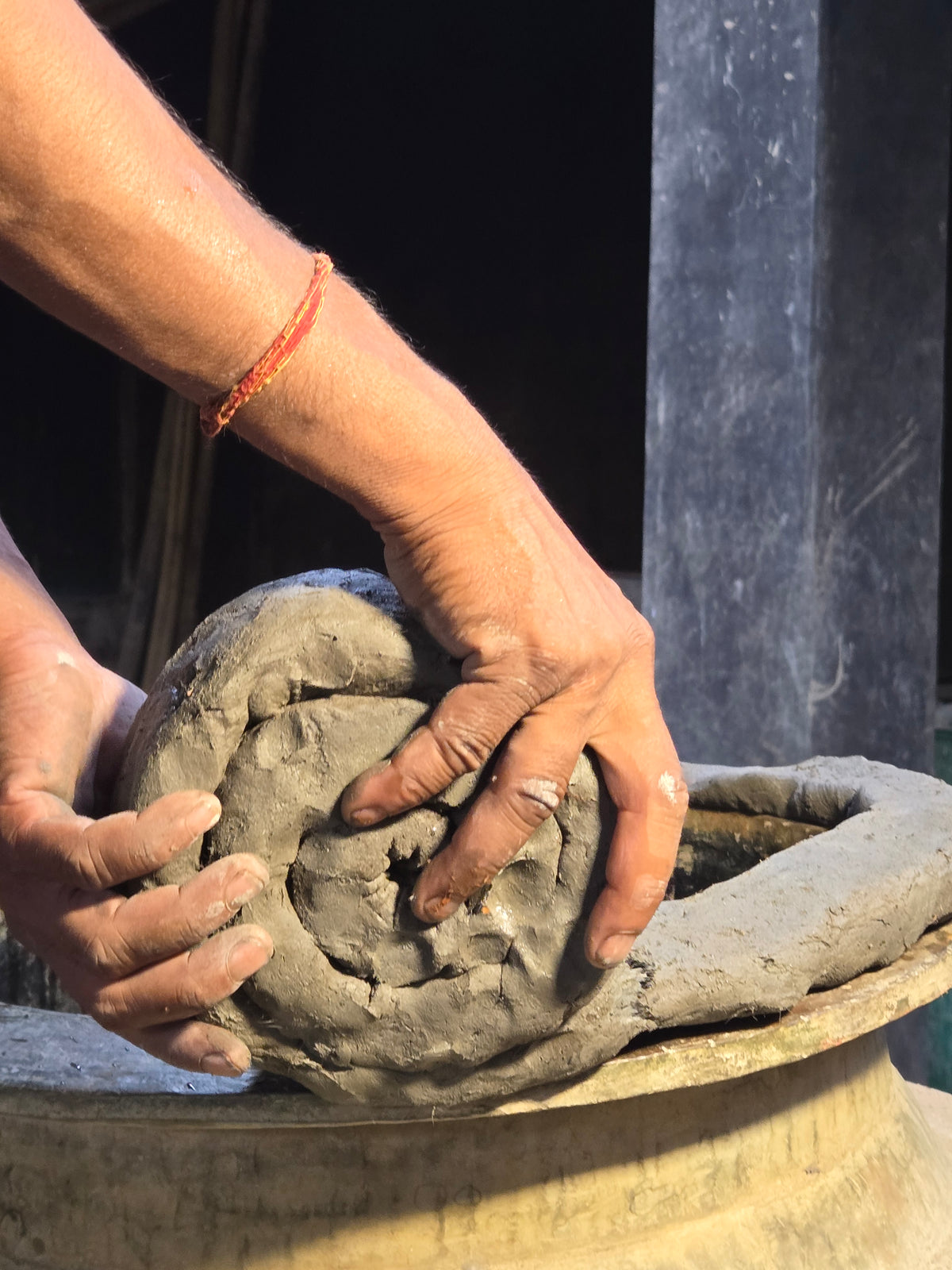
To ensure that no aromatic steam escapes during the journey, both ends of the hollow bamboo pipe are sealed with a thick ring of mitti clay harvested from local Kannauj soil.
This red clay is pressed firmly by hand to form a completely airtight seal between the copper vessel and the bamboo conduit. Nothing is allowed to leak or evaporate throughout the twelve to sixteen hours of distillation. The combination of a copper vessel, a wood fire, native clay, and a bamboo pipe forms a closed, organic system that operates entirely without metal joints, rubber hoses, or modern machinery.
Preserving Unaltered Floral Notes
Metals can react with hot organic vapors or impart metallic notes into delicate steam. By using natural bamboo, the floral vapor travels through an inert channel that preserves the true, unaltered fragrance of the harvest.
Whether distilling Damask roses gathered at sunrise or baking local clay for Mitti Attar, the bamboo chonga ensures that what enters the sandalwood oil base in the receiver is the unadulterated essence of the raw material.
A Hundred-Year Standard
While industrial perfumery relies on stainless steel columns and automated temperature valves, our workshop continues to rely on hands, fire, clay, and bamboo. Hari Bhai understood in 1920 that certain natural processes cannot be improved by industrial shortcuts. Through my grandfather Rakesh in the 1960s, my father Neeraj in the 2000s, and our work today, the bamboo chonga remains a quiet testament to our refusal to compromise on purity.