
The same process.The same hands.Since 1920.
Every product in our range begins here - in our Kannauj workshop, with a copper deg and a slow fire. This is the process exactly as it has been practiced for four centuries.
Picked at sunrise.
"Damask roses are picked at sunrise from our own fields in Kannauj - by hand, one by one, before the heat of the day opens the petals fully. A fully open rose has already begun to lose its fragrance. Timing is everything. The harvest happens in the early months of the year when the Damask blooms are at their peak - and it is done every morning without exception."
Sealed with mitti.
"The freshly picked petals are carried to the workshop and placed immediately into the copper deg - a large, round-bottomed vessel that holds between 40 and 160 kilograms of material. Water is added. The deg is then sealed at its rim with a ring of mitti clay - the same red clay from the Kannauj soil - pressed firmly by hand to create an airtight seal. Nothing escapes until we open it."
Wood, not gas.
"A wood fire is lit beneath the deg. Not a gas flame. Not an electric element. Wood - slow, patient, controllable. The temperature must remain consistent throughout the distillation. Too hot and the fragrance burns. Too cool and the steam never rises. The person tending the fire has spent years learning to read it - adjusting the wood, watching the steam, knowing when to add more and when to pull back. This knowledge cannot be written down. It is passed from hand to hand."
Bamboo, never metal.
"As the fire heats the deg, steam begins to rise from the petals and water below. This steam carries the fragrance of the flower inside it. It travels upward and out through the chonga - a hollow bamboo pipe sealed at both ends with mitti clay - which connects the deg to the bhapka. The bamboo is essential. Unlike metal, bamboo does not conduct heat. The steam cools as it travels through the pipe, beginning its transformation."
Held in sandalwood.
"The cooled steam enters the bhapka - a smaller copper vessel submerged in cold water, filled with pure sandalwood oil. As the steam enters the oil, it releases the fragrance of the flower directly into it. The sandalwood oil acts as a carrier and a fixative - absorbing the fragrance and holding it without the need for any alcohol. Over hours, the bhapka slowly fills with attar. The water is periodically replaced to keep the bhapka cool. The fire is tended continuously."
Sixteen hours. No shortcut.
"A single batch takes between twelve and sixteen hours. There is no way to speed this up. No setting to adjust. No shortcut that preserves the quality. The person who starts the fire in the morning is still there when the bhapka is opened in the evening - or the following morning, for the deepest attars. This is the part of our process that no machine can replace. Not because machines cannot apply heat - but because machines cannot wait."
Opened by hand.
"When the time is right - and only the person tending the process knows when - the bhapka is opened. The attar inside is carefully separated from any remaining water using a traditional leather pouch called a kuppi. What remains is pure attar: the concentrated fragrance of the flower, held in sandalwood oil, made without a single synthetic ingredient. This is what goes into every bottle we send you."
"One gram of rose attar requires sixteen hours and the petals of thousands of Damask roses. We have never found a reason to do it differently."
Five collections.One unbroken method.
The attar takes sixteen hours.The fragrance lasts all day.
Every attar in our Itra-e-Mehfil collection is made through the complete deg-bhapka process - Damask roses, jasmine, kewda, mitti, oudh, each with its own season and its own raw material, all distilled into the same patient sandalwood base.
The deg is loaded fresh. The seal is pressed by hand. The fire is tended for sixteen hours. The bhapka is opened only when the person watching it knows it is time.
No two batches are exactly alike. That is not a flaw. That is the point.
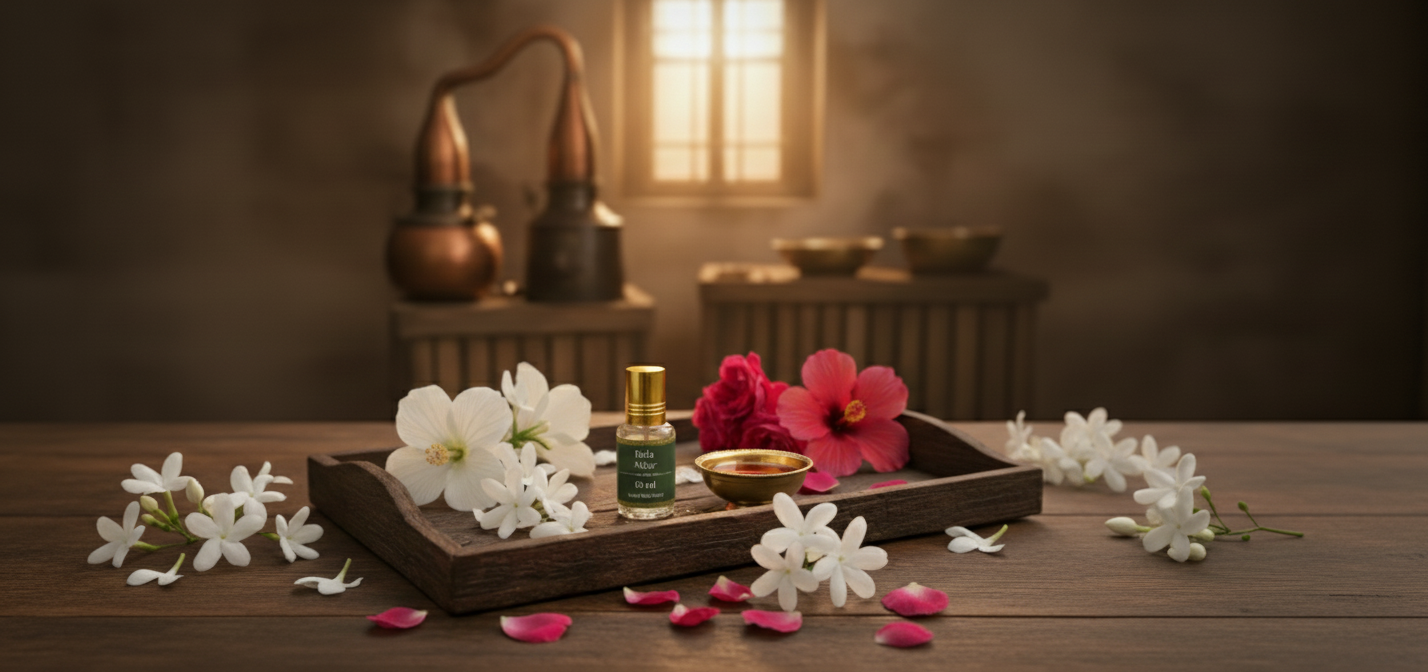
The water is simple.The process is not.
Our floral waters are made through the same deg-bhapka method - the only difference is the bhapka is left empty. No sandalwood. No oil. Just the steam of the flower condensing into pure hydrosol.
No additives. No preservatives. No alcohol stabilisers. The rose water, the kewda water, the bela water - each is collected from its own dedicated distillation, in its own season.
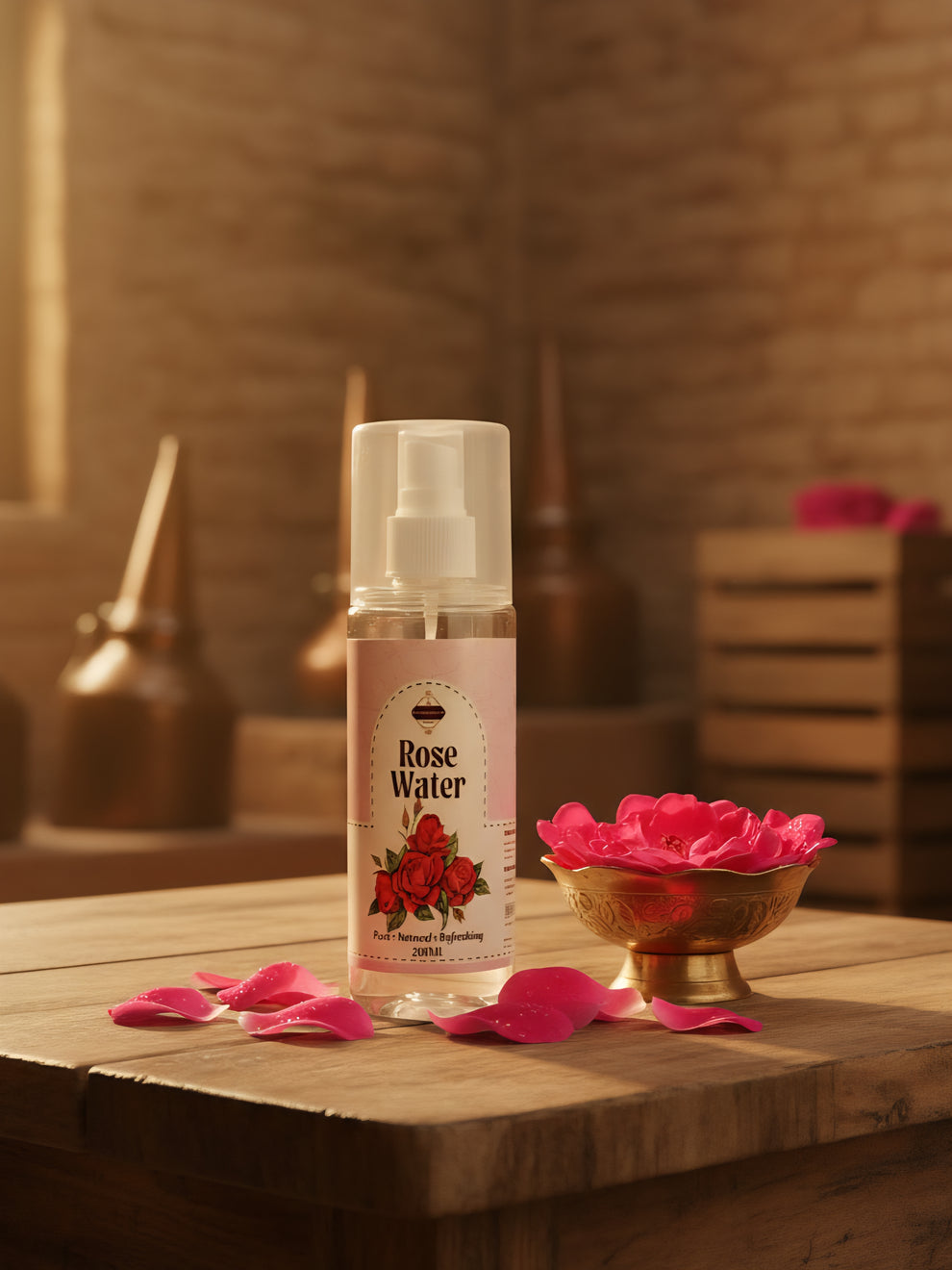
No fire this time.Just roses, sugar, and forty days of sunlight.
Gulkand is the one preparation in our range that does not pass through the deg. Damask petals are layered with sugar in glass jars and placed in direct sunlight for forty days.
The jars are rotated every two or three days. The sun does the rest - slowly transforming the petals and the sugar into a single, dark, fragrant rose preserve. Patience, again. Just a different kind.
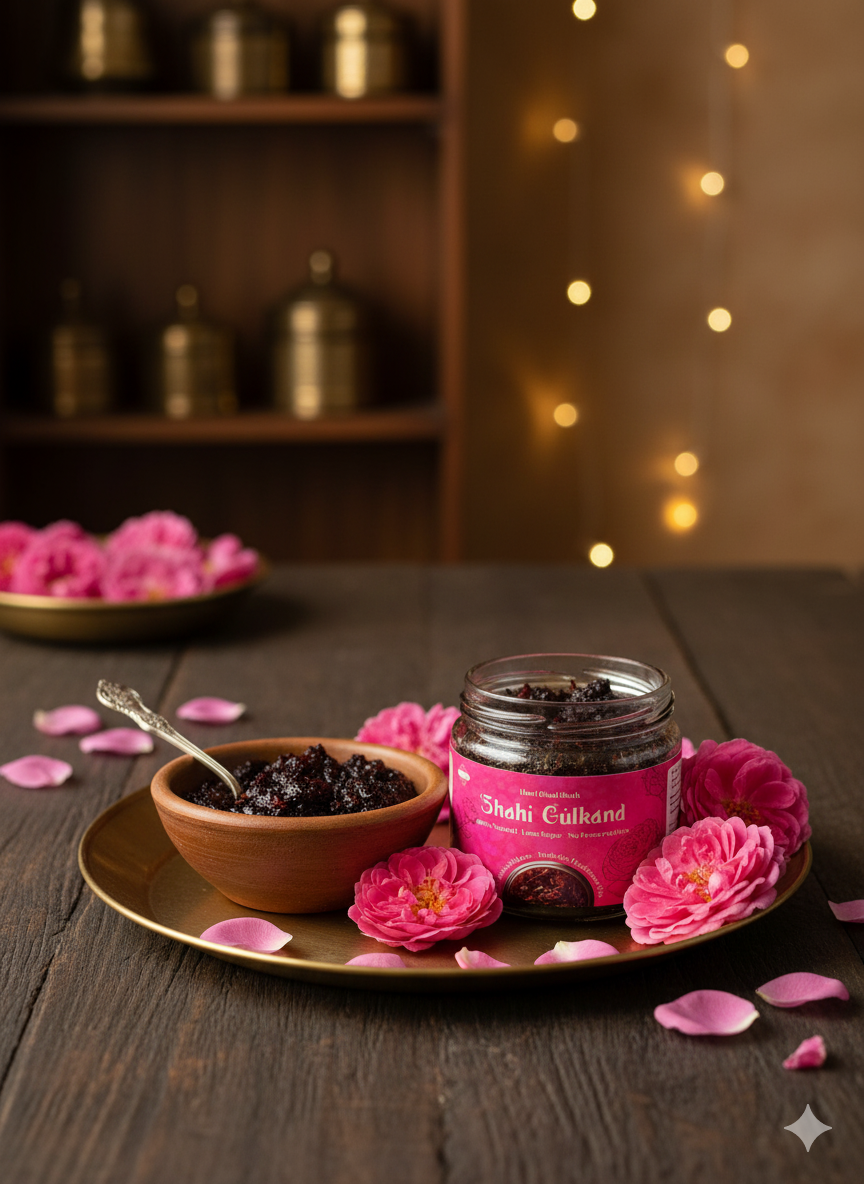
Cold-pressed.Single source. Nothing else.
Our oils are cold-pressed - no heat, no chemical extraction, no refining. The natural colour of the seed, the natural weight of the oil, the natural medicinal properties - all preserved.
One ingredient per bottle. One origin per ingredient. One process applied without exception.
Made from what we make.Nothing borrowed.
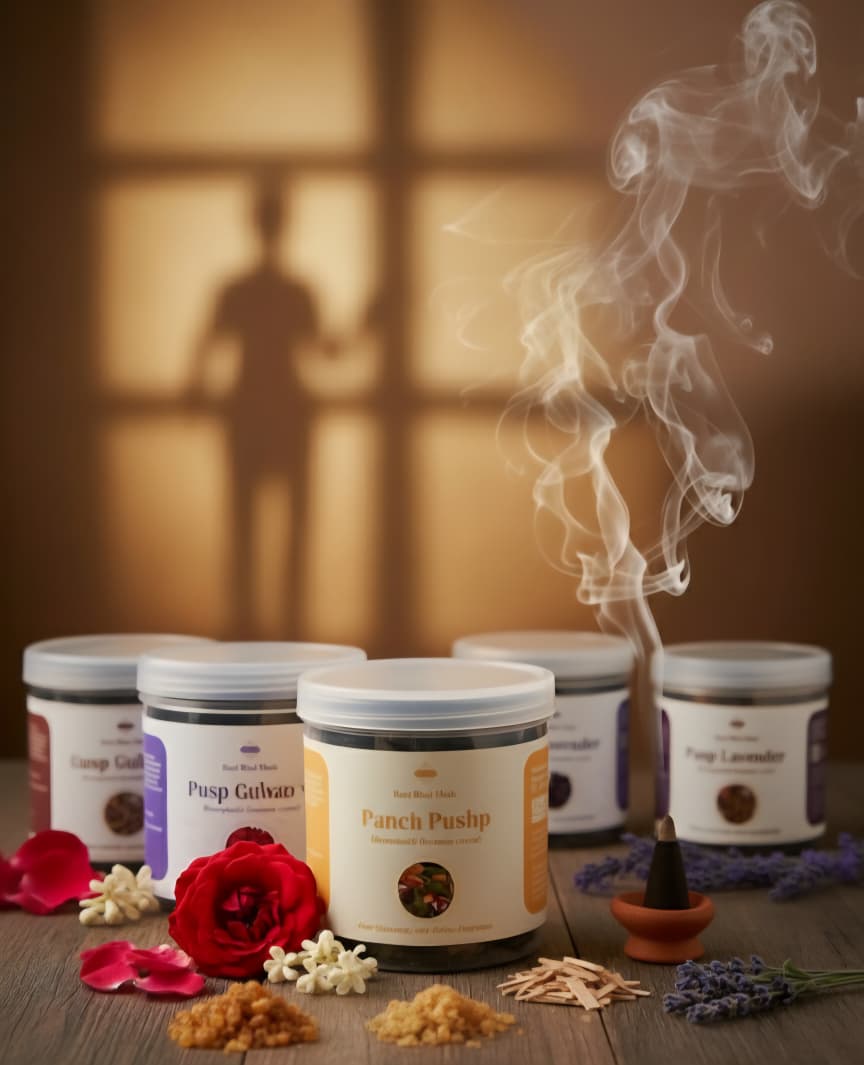
Our dhoop is made from natural resins, herbs, sandalwood powder - and from our own attars. Hand-ground. Hand-rolled. Hand-dried.
No charcoal base. No synthetic binders. No fragrance oil sprayed on the outside. The craft completes its circle here - the attar we distill in the morning becomes the smoke that fills a room in the evening.
Every product.Every batch.Every time.
"Not in the attar. Not in the rose water. Not in the oils. Not in the gulkand. Not in the dhoop. Every ingredient in every product we make is natural - the same ingredients the people of Kannauj have used for four centuries. We have never added a synthetic fragrance, a chemical preservative, or an artificial fixative to anything we make."
"Traditional attar does not need alcohol to carry fragrance. The sandalwood oil base holds the fragrance without it - for longer, more intimately, more honestly. We have never used alcohol as a base or a dilutent in any product we make. What you apply to your skin is oil and fragrance. Nothing that evaporates in three hours and leaves nothing behind."
"The deg is loaded by hand. The mitti seal is applied by hand. The fire is tended by hand. The bhapka is opened by hand. The attar is separated by hand. The bottles are filled by hand. There is no stage in our production process where a machine replaces a person. Not because we cannot afford machines - because machines cannot do what hands do."
Made the way you just read.Now in your hands.
Seven collections. Each one made in our Kannauj workshop using the same process - the same deg, the same fire, the same hands - that have been working since 1920.
Explore Our Collections →Try the craft before you commit.That is what the Trial Pack is for.
A small, curated set of our most-loved attars and waters. Enough to live with each one for a few days. Find the one that is yours - before committing to a full bottle.