KANNAUJ & CULTURAL LORE
The Scented Soil: A Four-Century History of Kannauj Perfumery
Notes from the Kannauj Workshop
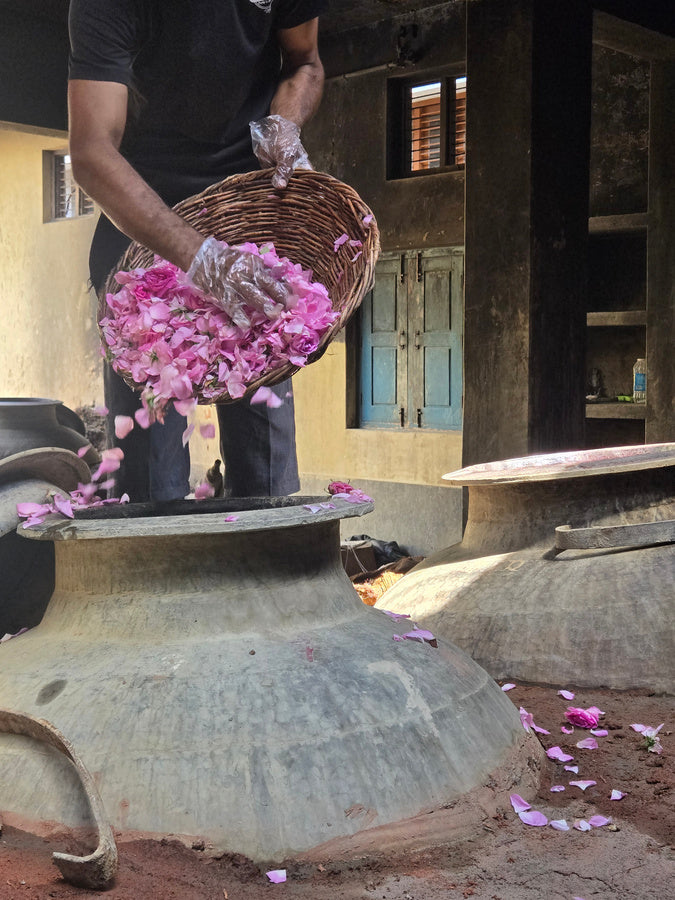
Some places are remembered by their monuments. Kannauj is remembered by its scent.
There are places you visit once and remember for a lifetime. And there are places you can remember without ever seeing them again. Kannauj is one of them.
For centuries, this ancient city in Uttar Pradesh has been associated with flowers, fire, copper, sandalwood and the quiet work of perfumers. Here, fragrance was never simply something to wear. It became a craft, a livelihood, a tradition—and eventually, part of the identity of the city itself.
For nearly four centuries, generations of artisans in Kannauj have practiced the making of traditional attar through a method that has remained remarkably close to its origins. The equipment is simple. The materials are natural. The process is slow. And the knowledge is handed down by people, rather than machines.
This is the story of that tradition. This is the story of the scented soil of Kannauj.
The Copper Vessel at the Heart of Kannauj
Long before fragrance became a global industry, perfumery was deeply connected to the natural world. Flowers were gathered by hand, oils were prepared patiently, and aromatics were distilled over fire.
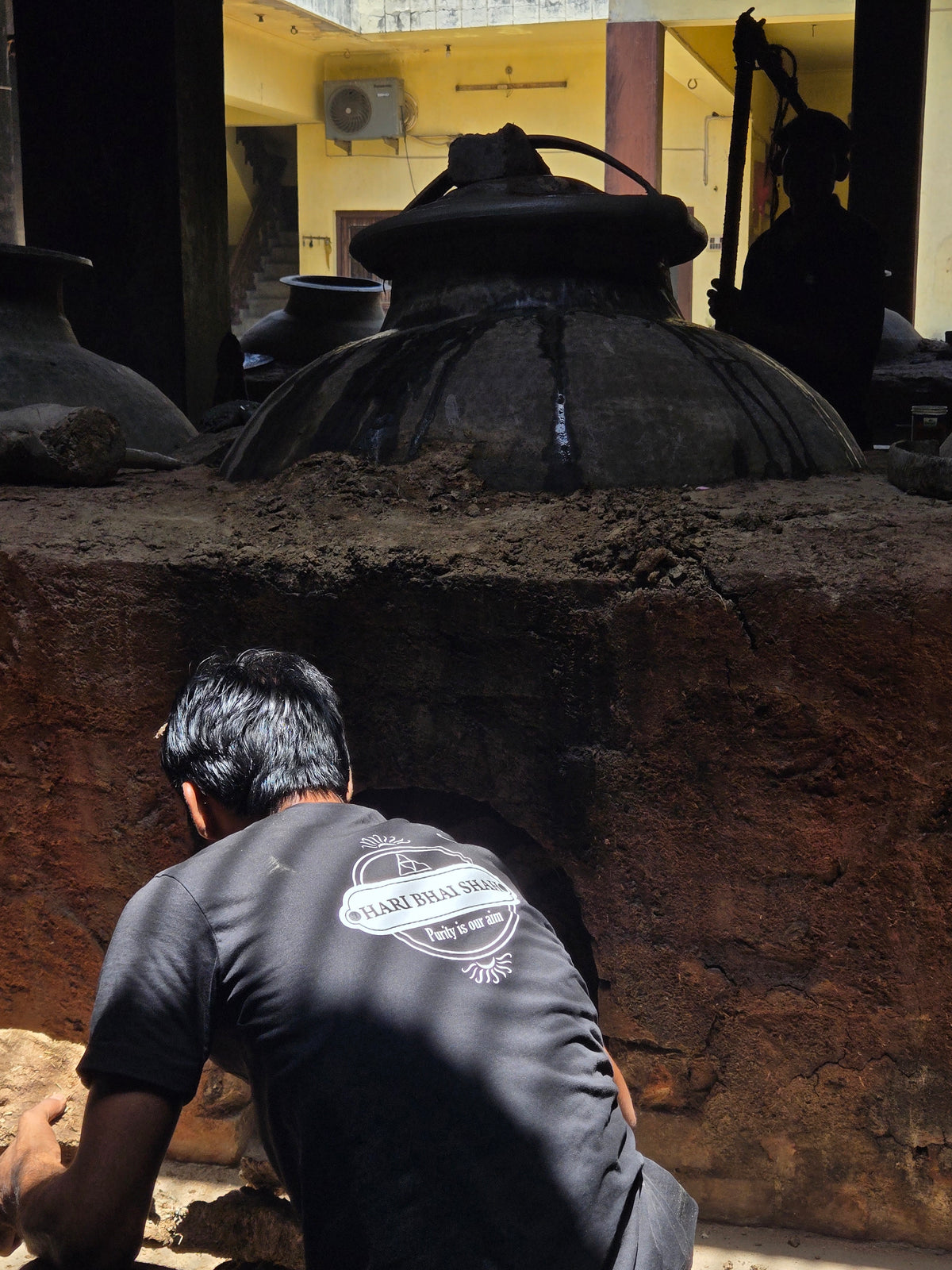
At the centre of traditional Kannauj perfumery is an apparatus known as the deg-bhapka. A copper deg holds the flowers and water, sealed with mitti clay, heated over a slow wood fire. The fragrant vapours pass into the bhapka, where they are absorbed into sandalwood oil.
The real craft lies in experience—knowing how much heat is enough, when to lower the fire, and when the distillation is complete. Traditional perfumery begins with understanding the flower: harvesting roses, jasmine, and kewra at the exact right moment to capture their delicate aromatic qualities.
“A factory is designed to make a material consistent. A perfumer working with nature must first understand its variation.”
The Fragrance of the Earth Itself
Among Kannauj's most remarkable creations is Mitti Attar. Its story begins not with a flower, but with earth. Clay is shaped and baked before being carefully distilled to capture the warm, mineral character associated with earth after the first rain.
The result is one of India's most distinctive natural fragrances: earthy, dry, warm and unexpectedly evocative. It is the scent of a season returning—the smell of monsoon arriving after summer, the memory of a courtyard after rain, and the warmth of ground beneath bare feet. A scent does not have to imitate a memory; sometimes it can preserve one.
Why Sandalwood Became Part of the Tradition
During distillation, sandalwood acts as the base into which the aromatic character of flowers is absorbed, giving attar its depth and longevity. Sandalwood remains a living base—a patient material that lets floral notes mature, evolve, and change with warmth and time on the skin.
When the World Learned to Make Fragrance Faster
Modern industry introduced synthetic materials and mechanised production for speed and scale. Kannauj stood at a crossroads and chose the deliberate rhythm of copper degs over industrial speed, preserving human judgment as part of the composition.
A Tradition Belongs to Its People
Generational knowledge travels between hands, carried by apprentices, families, and makers. The real archive of Kannauj perfumery exists in workshops, habits, memory, and small unwritten adjustments.
Where Our Story Enters the Tradition
Since 1920, the Hari Bhai Shah family has helped steward the craft with respect for its materials, makers, and memory. Our history is one small chapter in a four-century tradition carried forward by an entire community.
The Scented Soil: Six Elements of Kannauj Craft
- Soil · Baked clay & Mitti Attar
- Flowers · Damask rose, jasmine, kewra
- Water · Carrying fragrant steam
- Fire · Slow wood-fired bhatthi
- Sandalwood · The living base oil
- The Artisan · Four centuries of human judgment